Global Digital Payments
Send and receive MUI with anyone who has a wallet address, in any country.
ProposedPre-launch project · Independent Layer-1
An independent Layer-1 blockchain project developing its own native coin, MUI, and a new generation of digital payment infrastructure that connects people, businesses and merchants across borders.

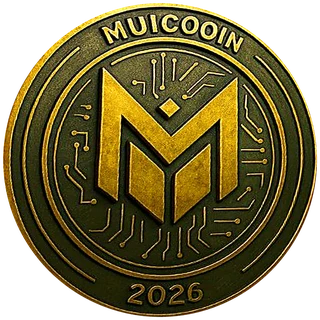
MUI · native coin
Concept render
Send and receive MUI with anyone who has a wallet address, in any country.
ProposedAn independent Layer-1 with planned Proof-of-Stake and public, verifiable records.
In developmentMobile, desktop and merchant wallets, designed for self-custody.
ProposedQR payment requests and sales reconciliation for shops and online stores.
ProposedSix roadmap phases, with independent security audits before any mainnet.
ProposedOur Vision
One coin and one wallet that work the same way in any country. Individuals, businesses and merchants on one network, with payments settling directly between them on a public ledger.
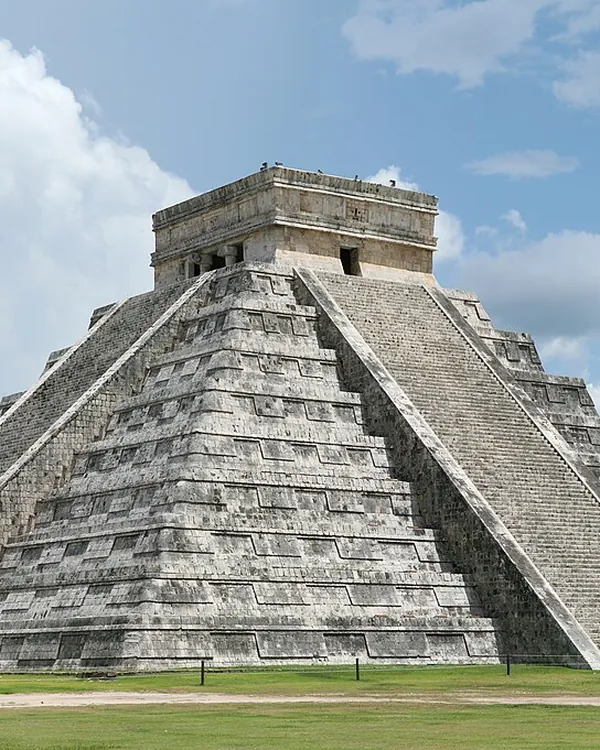
From the top of Mount Everest to the wonders of the world







01 — Introducing MUICOOIN

MUICOOIN is building its own blockchain rather than borrowing someone else's. The network, its rules and its native coin, MUI, are being designed together, with one job in mind: moving value between people and businesses, wherever they are.
Most new digital currencies launch as tokens on an existing chain. That is quick, but it leaves the project dependent on another network's fees, congestion, upgrade schedule and governance. MUICOOIN is taking the slower route. It plans an independent Layer-1 network with its own validators and consensus, where MUI is the coin the network itself runs on.
The work is at an early stage. The architecture is being specified, the wallets are being designed and no part of the network is live yet. Everything on this site is labelled so you can see where it stands.
Both models have trade-offs. Running an independent network brings more responsibility for security and validator participation. See Technology and Risk Disclosures.
02 — Our vision
Today a payment between two countries can pass through several banks, currency conversions and settlement windows before it arrives. Fees are hard to predict and the timing even more so. That friction lands hardest on the small business, the freelancer and the family sending money home.
MUICOOIN's long-term vision is one coin and one wallet that work the same way in any country. Individuals, businesses and merchants would all use the same network, with payments settling directly between them on a public ledger.

A self-custody wallet for keeping MUI and sending it to anyone with an address, at home or abroad.
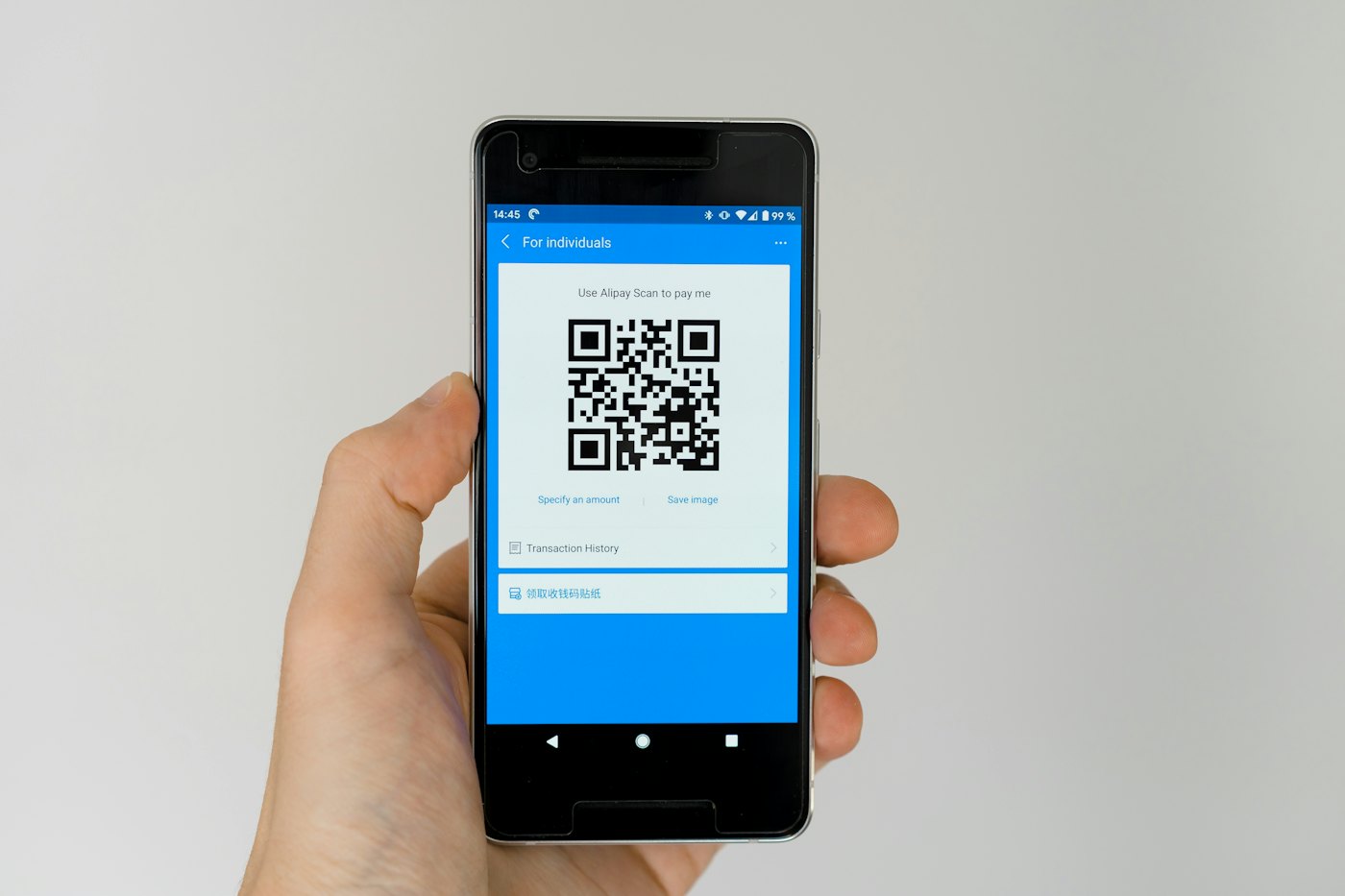
A merchant wallet for taking MUI in a shop or online, with clear records of every payment.
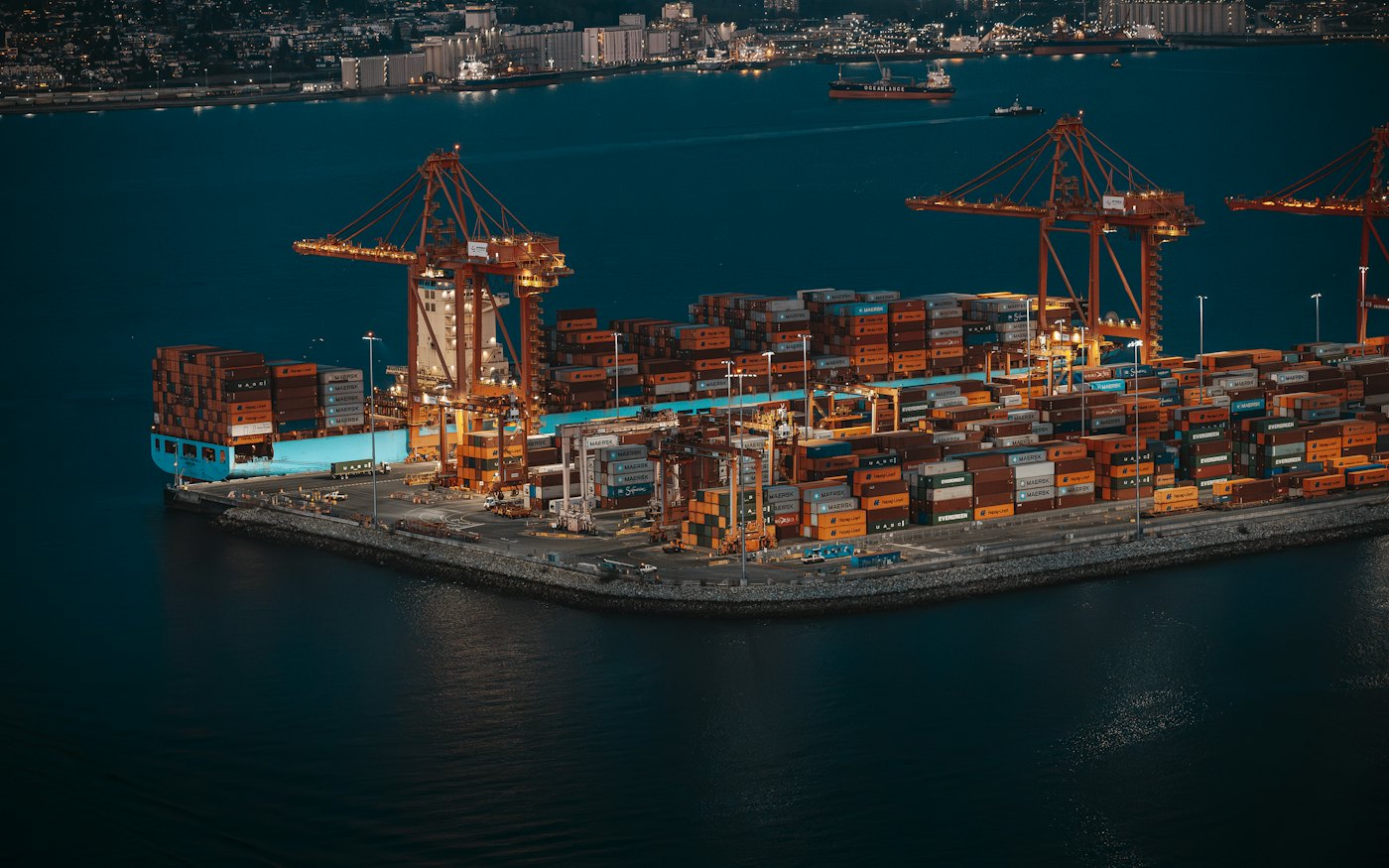
Business-to-business payments that settle on the same network the merchants and individuals use.
All of the above describes intended future functionality. Proposed
03 — The ecosystem
Each pillar depends on the one beneath it. Payments need wallets, wallets need the network and merchants need all three. That's why the work runs in this order.
Send MUI to anyone with a wallet address in any country, without routing through a chain of correspondent banks. Each transfer is recorded on the public MUICOOIN ledger. Fee levels and confirmation times will depend on network parameters that are still being specified.
Mobile and desktop wallets in which the user holds their own keys. They are designed around a recovery phrase, device-level encryption and clear transaction confirmation screens. The wallets are planned for Phase 3 of the roadmap and will be independently reviewed before any public release.
A merchant wallet and checkout tools that let a shop show a payment request as a QR code, receive MUI and reconcile it against sales. Merchant adoption is a long-term goal. It depends on the network, the wallets and the relevant local regulations all being in place first.
Companies in different countries could pay one another in MUI and settle on a shared ledger that both sides can verify. Business use will also need invoicing integrations, accounting exports and compliance processes. These are still being scoped.
The base layer is the network itself. That means validator software, planned Proof-of-Stake consensus, a public transaction ledger and MUI issued as the network's native coin. Everything else is built on top of it, and this is where the current technical work is focused.
Concept film · Everyday life
Paying a friend, buying groceries, grabbing a coffee, sending money home, settling a trade invoice, cashing out at closing time. This short animation shows how MUICOOIN is designed to make each of these as easy as sending a message.
Illustrative concept only. The MUICOOIN app, wallets, merchant tools and any conversion of MUI into local currency are planned features and are not operational. People, businesses and amounts shown are fictional. Conversion to cash would only be offered through licensed partners where local regulation permits. See Risk Disclosures.
Decentralized by design
In a traditional payment system, one company keeps the ledger. It decides who can pay, when, and at what cost. MUICOOIN is designed differently: many independent validators keep the same record together, and no single party, including MUICOOIN itself, can change it alone.
Official wallets are designed so that you alone hold the private keys. No bank or company sits between you and your MUI. The trade-off: you must keep your recovery phrase safe, because nobody can reset it for you.
The network has no banking hours, weekends or holidays. A payment from Dubai to Manila follows the same rules as one across the street, without a chain of correspondent banks.
Payments move directly from one wallet to another, so fewer intermediaries take a cut. Fees are paid in MUI and set by network parameters, which are still pending specification.
Every transaction is recorded on a public ledger that anyone can check in the explorer. Supply, transfers and the validator set are visible, so you don't have to take anyone's word for them.
To rewrite history, an attacker would need to control most of the staked MUI. Validators who break the rules can lose part of their stake. Once a payment is final, it can't be reversed.
Upgrades are intended to go through an open governance process rather than a private decision. The exact governance model is pending specification.
Why people would hold MUI
MUI is the coin the network itself runs on, so its uses are built in. These are the planned uses once the network and wallets launch:

MUI is not available to buy yet. The network is not live, MUI is not listed or trading, and there is no token sale. We will never promise that MUI will rise in value. Virtual assets can lose all of their value. If you'd like to hear when there is news, register a non-binding interest or join the community, and read the Risk Disclosures first.
04 — Our blockchain
This is the proposed architecture. It is not yet running. Where a parameter hasn't been decided, we say so rather than guess.
MUICOOIN is being designed as a standalone blockchain with its own nodes, ledger and rules. It is not a token on another network and not a sidechain secured by one. In development
Validators would lock up (stake) MUI for the right to propose and confirm blocks, and could lose part of that stake for provably dishonest behaviour. The exact consensus algorithm, finality model and slashing conditions are pending specification.
The network is intended to be secured by validators operated by independent parties, not by MUICOOIN alone. Validator admission criteria, minimum stake and the size of the validator set have not yet been set. Proposed
Every confirmed transaction would be written to a public ledger that anyone can inspect through a blockchain explorer, which is planned for Phase 3. Proposed
A hard ceiling of 100,000,000 MUI is proposed and would be enforced by the protocol itself. How and when coins enter circulation is described on the Tokenomics page. Proposed
The official mobile, desktop and merchant wallets will connect directly to MUICOOIN nodes, and public interfaces are planned so that third-party wallets can integrate too. Proposed
Merchant checkout, payment requests and business settlement tools are planned on top of the base layer once the network is stable and has been audited. Proposed
| Network type | Independent Layer-1 |
|---|---|
| Native coin | MUI |
| Consensus | Proof-of-Stake (planned) |
| Proposed max supply | 100,000,000 MUI |
| Block time / finality | Pending specification |
| Throughput | Not yet measured |
| Security audit | Not yet conducted |
| Mainnet | Not launched |
05 — MUI coin economics
A predefined proposed maximum coin supply, with no further issuance beyond it.
All allocations are proposed and subject to final technical, legal and regulatory documentation. Release schedules for each category are pending specification.
06 — MUICOOIN wallets
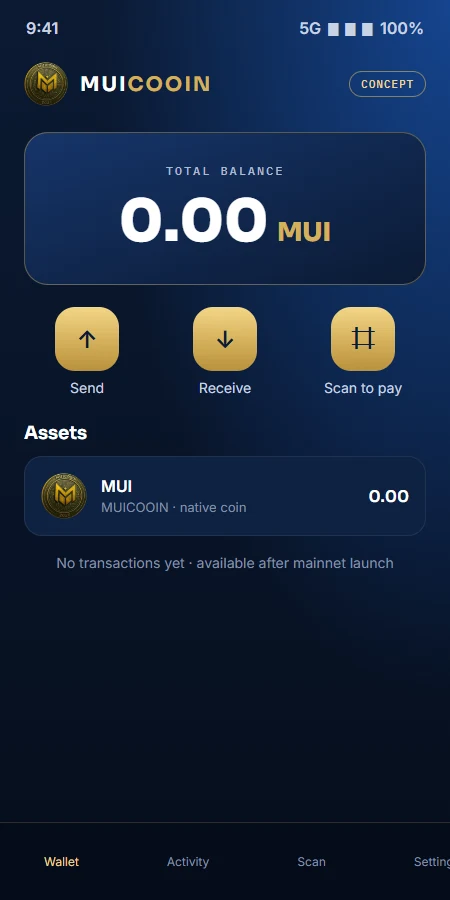
Design concepts for the three planned wallets. They are not available to download. Any app claiming to be a MUICOOIN wallet today is not ours.

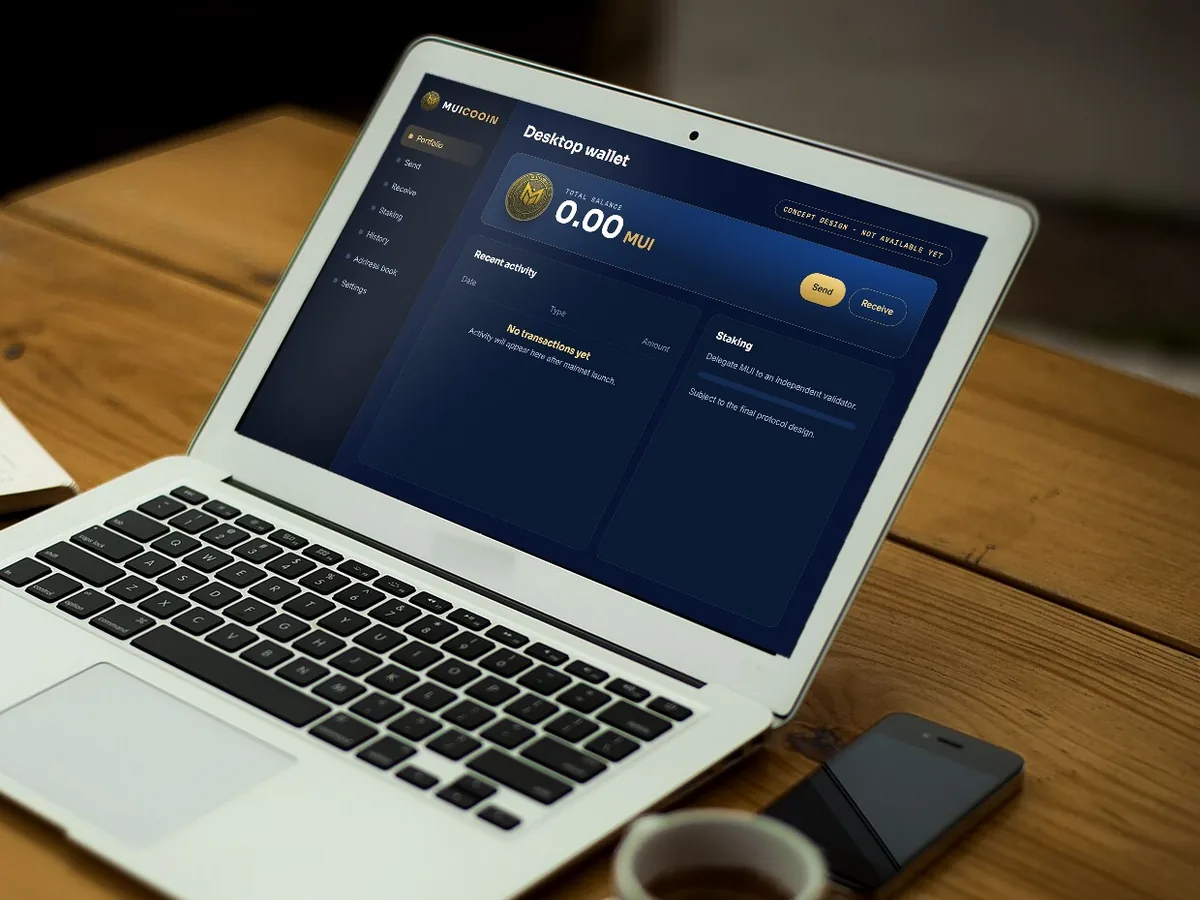
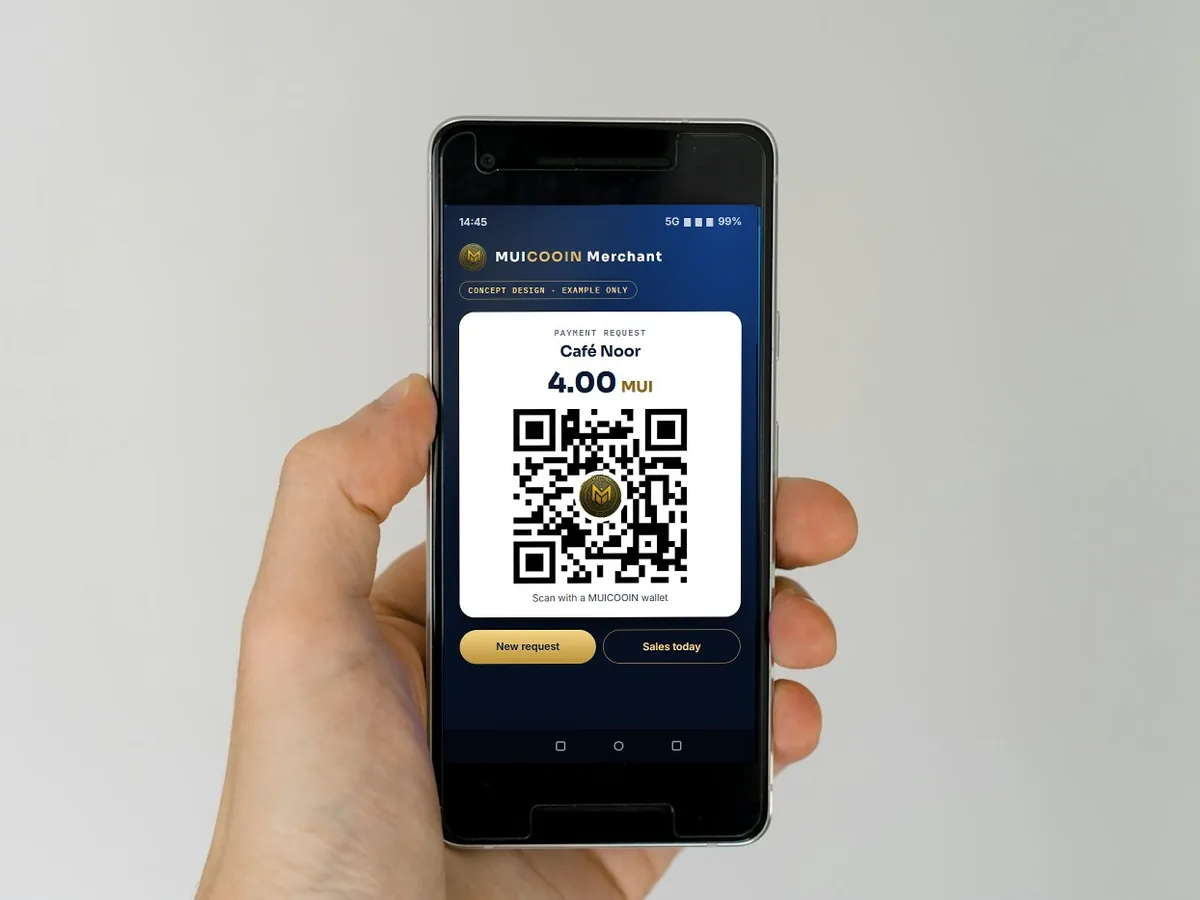
Photos are illustrative. The wallet screens are concept designs; no MUICOOIN wallet is available yet.
For everyday use: holding MUI, paying and getting paid.
For larger balances, staking and closer control.
For shops and online businesses accepting MUI.
07 — Development roadmap
These are proposed development objectives, not promised dates. Each phase starts only once the one before it has delivered what it depends on.
Getting the groundwork right: who we are, what we are building and the legal structure we are building it in.
Building the network itself.
The tools people will actually use.
Nothing goes to mainnet before this phase is complete.
The network goes live, subject to audit results and legal clearance.
Growing use, country by country.
08 — Why MUICOOIN
These aren't promises of outcome. They're the reasons for the choices we have made, and you can judge them on their own merits.
A payment network shouldn't have to wait on, or pay for, another network's congestion. Running our own Layer-1 means MUICOOIN controls its own fee policy, upgrade path and performance priorities. In return, it carries full responsibility for security.
MUI is the asset the network runs on. It pays for transactions and would be staked to secure the chain. Its role isn't bolted on afterwards, and it doesn't depend on a third-party smart contract.
The project is built around a use: paying and getting paid. We think a coin with a clear job inside a working network is easier to understand and to evaluate than one without.
Most people will never run a node. For them, the wallet is the product. That's why the official wallets sit on the roadmap next to the protocol rather than being left to others later.
A payment coin only becomes useful when there are places that accept it. Merchant tooling is part of the long-term plan from the start. It depends on the network, regulation and real business demand, and none of those can be guaranteed.
09 — Investor information
This area sets out the project for prospective investors and strategic partners. It is informational only. Nothing here is an invitation to buy MUI, and there is no way to buy or reserve it on this site.

| Proposed maximum supply | 100,000,000 MUI |
|---|---|
| Hypothetical investor allocation pool | 5,000,000 MUI |
| Illustrative calculation price | US$0.10 per MUI |
| Illustrative example | US$100,000 = 1,000,000 MUI |
| Proposed vesting | 24 months, subject to final legal documentation |
Not an offer. These figures are a hypothetical planning example. US$0.10 is not an established market price, a sale price or a valuation. There is no token sale, no current investment offer and no reservation process. Any future arrangement would be made only through formal legal documentation, after legal and regulatory review, and only where lawful.
10 — Community
The official channels will open as the project moves forward. Until a channel is listed here as verified, treat any account using the MUICOOIN name as unofficial.